
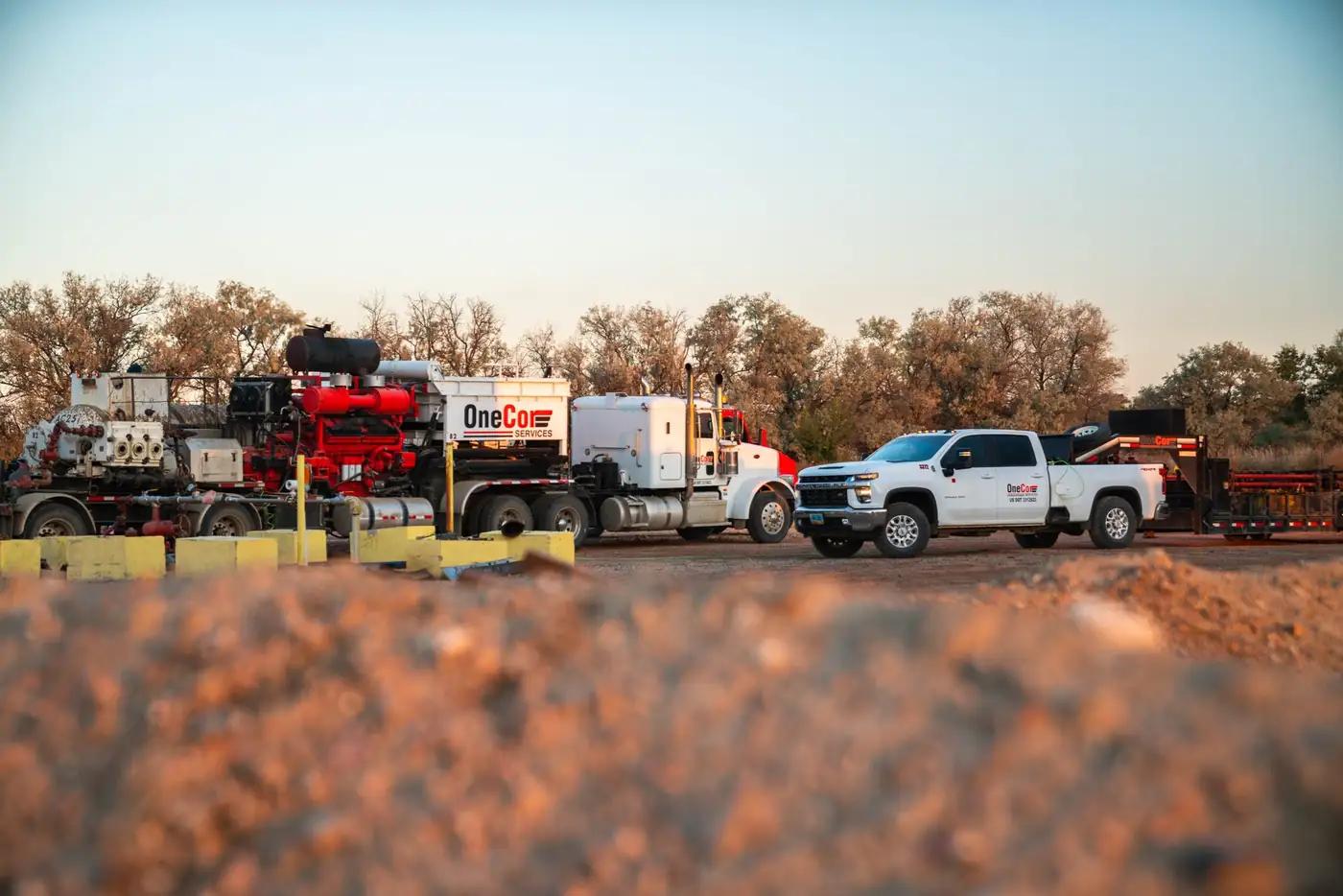
166 acid treatments, measured: what moved production in a Permian waterflood
Over 11 months, OneCor pumped acid restimulation treatments across three operating units for a Permian Basin operator. Then we went through every evaluable well to find what worked and what to change.
The challenge
A mature waterflood with more than 570 wells on test across three units. Wells were losing production to scale and deposits. The operator needed to know which wells to treat, with what, and how, so the program paid back.
What we did
Treated the wells
166 acid treatments across three operating units over 11 months
Tracked the response
Production before and after on every evaluable well, 54 in all
Sampled the water
Water analysis showed calcium carbonate scale across the field, which acid dissolves, and barium sulfate in places, which acid doesn't. Iron ranged from 12 to 1,023 mg/L. Samples after treatment showed calcium and iron up 5 to 50 times, confirming the acid was dissolving scale.
Compared what we ran
Treatment volume, delivery method, acid chemistry, and results by unit and by well
Wrote the playbook
A treatment selection matrix for every future candidate
What we found
Volume was the strongest predictor of success. Average oil gain by treatment size:
Placement mattered as much as chemistry. Average oil gain by delivery method:
Barrels of oil per day, average change after treatment
The top performers went from zero to 15 to 34 barrels a day. Wells treated more than once suggest a re-treatment interval of about four to six months.
What we recommended
- At least 2,000 gallons for formation stimulation candidates. Keep 1,000-gallon circulations for wellbore cleanup only.
- Mechanical diversion on wells over 85% water cut with multiple perforated zones, so acid doesn't go to the water zone.
- Match the chemistry to the damage. Calcium carbonate gets 15% HCl. Barium sulfate gets a sulfate dissolver with HCl. High iron gets HCl with chelating agents.
- Sample the water before treatment and at 24 and 72 hours after, on every well, to build a response database.
Operator name withheld. Program data through April 2026. Success rate is the share of evaluable wells with an oil gain after treatment.
What OneCor provided
Analysis
Well-by-well response and water chemistry review
Chemistry
Acid blends matched to the scale type
Logistics
Product delivered to 166 treatments
Pumping
Treatments pumped on location
Have a well or system like this?
Send us what it's doing
Send the well history, current production, and what's already been tried. Our engineers will tell you whether a job pays back before you commit to it.